Dreaming about a Pasadena home with real character? This city is one of Southern California’s standout places for historic residential architecture, with more than 200 individually designated historic sites and over two dozen historic neighborhoods and districts tracked by the city. If you want to understand where Pasadena’s most notable homes are, what styles you’re likely to see, and what to check before you buy, this guide will help you get oriented. Let’s dive in.
Why Pasadena stands out
Pasadena’s historic built environment grew quickly after the city incorporated in 1886 and railroad service expanded from Los Angeles in 1888. That early growth helped shape a city with a deep mix of architectural eras rather than one single look.
Today, Pasadena describes itself as a Southern California center of architecture. For buyers, that means you can find everything from late Victorian homes to Craftsman bungalows, Period Revival residences, and mid-century modern designs, often within a short drive of each other.
Pasadena’s main home styles
If you are starting your home search, it helps to think about Pasadena’s historic homes in three broad eras. The city’s historic context materials group residential architecture into late Victorian, Arts & Crafts, period revival, early modernism, and postwar modernism, but most buyers will encounter a few recurring categories.
Craftsman and bungalow homes
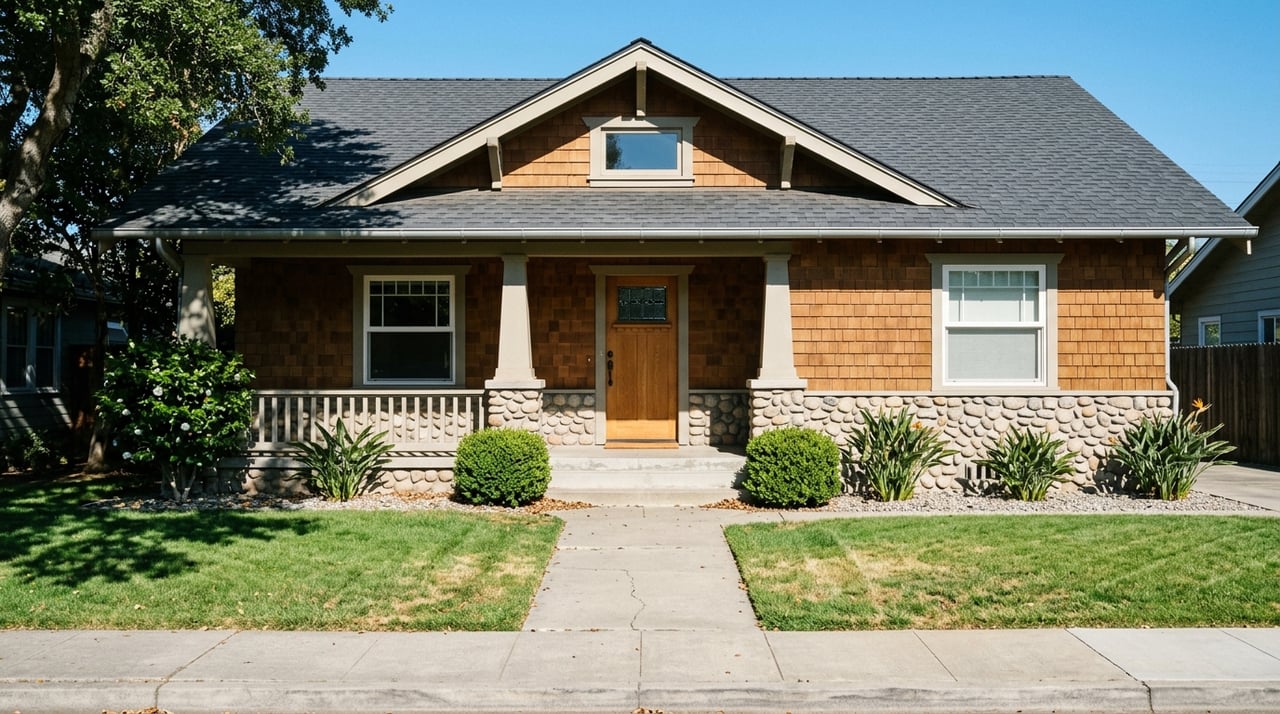
Craftsman and California Bungalow homes are central to Pasadena’s identity. The city and local preservation sources both point to the bungalow as one of the clearest expressions of Pasadena’s early residential character.
Pasadena is also generally described by the city as the birthplace of the bungalow court. The city has documented 17 bungalow courts, many dating from 1909 to 1942, with a strong concentration on South Marengo Avenue.
These homes often appeal to buyers who want early 1900s charm, recognizable architectural details, and streets with a strong sense of visual continuity. If that is your style, Pasadena gives you several strong neighborhood options.
Period Revival homes
As Pasadena grew through the 1910s and 1920s, many neighborhoods added Period Revival homes alongside earlier Craftsman properties. This created blocks where architectural styles shift from one era to the next without losing a cohesive historic feel.
In practical terms, this means you may see a Craftsman home on one block and a Tudor, Colonial-inspired, or other revival-style residence nearby. For buyers, that mix can make Pasadena especially interesting because you are not limited to one historic look.
Mid-century modern and ranch homes
Pasadena’s postwar homes bring a different type of character. The city classifies Mid-century Modern homes from 1945 to 1968 and Ranch homes from 1930 to 1968, with many examples found in hillside and foothill settings.
Because much of Pasadena had already been built out by the mid-century period, many later homes were designed for dramatic or challenging sites. That often translates to custom layouts, strong indoor-outdoor connections, and architecture shaped by views, slopes, and lot conditions.
Best Pasadena neighborhoods for historic homes
Historic housing in Pasadena is not spread evenly across the city. The city’s planning materials show clear geographic clusters, which makes it easier to narrow your search based on the type of home you want.
Bungalow Heaven for classic Craftsman streets
Bungalow Heaven is one of the strongest choices if you want a concentration of early Pasadena bungalow architecture. The city describes it as one of Pasadena’s largest collections of California Craftsman bungalows.
The neighborhood is bounded by Orange Grove Boulevard, Mentor, Washington Boulevard, and Chester. Most of the district was built between 1906 and 1914, with additional construction from 1920 to 1923, plus a smaller mix of Victorian, 1930s, 1940s, and later homes.
What makes this area especially appealing is its clear architectural identity. If you want a neighborhood where Pasadena’s bungalow image feels immediately visible block by block, this is one of the best places to start.
Madison Heights and Oak Knoll for central character
Madison Heights and Oak Knoll are often top choices for buyers who want older homes in more central Pasadena settings. The city highlights both neighborhoods for their age, walkability, tree canopy, and proximity to central Pasadena amenities and institutions.
Madison Heights developed largely between 1910 and 1917 in Arts & Crafts styles, then continued into the 1920s with Period Revival houses. That layered development gives the neighborhood a rich mix of early 20th-century architecture.
For buyers, these neighborhoods can be a strong fit if you want historic character along with a central location. They are useful reference points when your goal is a home with architectural presence and convenience.
Garfield Heights for north Pasadena historic blocks
Garfield Heights offers a mostly Craftsman neighborhood pattern with some Queen Anne and Period Revival homes mixed in. It is bounded by Washington, Mountain, Garfield, and Marengo.
This area can make sense if you want older single-family homes but prefer a setting that feels less tied to bungalow courts and more tied to traditional residential blocks. It is a good example of how Pasadena’s historic stock varies from district to district.
South Marengo for bungalow courts
If bungalow courts are what caught your eye, South Marengo deserves special attention. The city has documented a notable concentration of these small-scale historic residential forms here.
The South Marengo Historic District includes 12 Craftsman bungalows built between 1901 and 1916 and still retains the feel of a pre-World War I residential street. For buyers drawn to compact historic streets and Pasadena’s early bungalow-court tradition, this area is especially relevant.
Governor Markham for early Pasadena architecture
Governor Markham is one of Pasadena’s oldest neighborhoods and gives you a broader look at the city’s earliest residential layers. Pasadena Heritage notes that 94 percent of its residences were built between 1891 and 1933.
The neighborhood includes a mix of Queen Anne, Four Square, Regency Revival, and Neoclassical architecture. If you enjoy variety and want to experience a compact district that reads like a timeline of early Pasadena design, this is an important neighborhood to know.
Linda Vista, Poppy Peak, and San Rafael for postwar design
If your taste leans more toward custom mid-century or ranch architecture, focus on the western and hillside areas of Pasadena. The city’s own mid-century tour shows that Linda Vista, Poppy Peak, San Rafael, La Loma, Laguna Road, and Hillside Terrace are key areas for postwar design.
These neighborhoods are where you are more likely to see homes that respond to topography, views, and unusual lot shapes. That can mean a very different experience from Pasadena’s flat-grid bungalow neighborhoods.
One especially useful example is Pegfair Estates in Linda Vista. The city describes it as an intact residential district developed in 1960 with Traditional, Modern, and Contemporary Ranch houses, some with Asian influences in plan, materials, and detailing.
How to match your style to the right area
If you are trying to narrow your search, a simple neighborhood-style match can help.
- For classic Craftsman character: Start with Bungalow Heaven, Madison Heights, Garfield Heights, and South Marengo.
- For central historic neighborhoods: Focus on Madison Heights, Oak Knoll, and Governor Markham.
- For bungalow courts and compact historic streets: Look closely at South Marengo and nearby Marengo/Pico.
- For hillside modern and postwar homes: Explore Linda Vista, Poppy Peak, and the San Rafael hills.
- For early Pasadena-era variety: Add Governor Markham to your list.
This pattern lines up with Pasadena’s historic-resource mapping and neighborhood history materials. It is a practical way to turn architectural interest into a more focused home search.
What buyers should verify before buying
Historic charm can come with added review requirements, so it is smart to do a little extra homework before you fall in love with a property. In Pasadena, the most important first question is whether the home is officially designated.
Check historic designation status
Pasadena’s Historic Preservation page directs owners and researchers to CHRID, the city’s interactive database. It includes every designated historic property and district in Pasadena, along with many properties identified in later surveys, including mid-20th-century buildings.
This matters because properties in landmark and historic districts are reviewed using Pasadena’s Design Guidelines for Historic Districts. Those guidelines are based on the Secretary of the Interior’s Standards for Rehabilitation.
Understand exterior-change review
Even outside formally designated districts, Pasadena’s design-review process applies citywide. In other words, exterior changes and additions are not something to assume will be simple or automatic.
If you are considering updates, it is worth understanding how the home’s designation status, district context, and city review standards may affect your plans. That is especially important if you hope to remodel, expand, or significantly alter visible exterior features.
Ask about possible tax relief
Some designated historic properties may qualify for property-tax relief through Pasadena’s Historic Property Contract Program, which was established under the California Mills Act. This does not apply to every older home.
Still, if a property is officially designated, it is worth asking whether that program may be available. It can be one of the more practical benefits tied to historic ownership in Pasadena.
Why local guidance matters
Pasadena’s historic housing market can be exciting, but it also rewards a thoughtful approach. Two homes may look similar at first glance, yet sit in different districts, follow different design-review rules, or belong to very different architectural traditions.
When you understand where Pasadena’s historic homes cluster and how the city categorizes them, you can search more strategically. That helps you spend less time guessing and more time focusing on neighborhoods and home styles that truly fit what you want.
If you are exploring Pasadena homes and want help narrowing down the right architectural style, neighborhood, or buying strategy, connect with Daniel Valdez for clear, personalized guidance.
FAQs
What historic home styles are most common in Pasadena?
- Pasadena buyers most often encounter Craftsman and California Bungalow homes from the early 1900s, Period Revival homes from the 1910s and 1920s, and mid-century modern or ranch homes from the postwar years.
What Pasadena neighborhood is best for Craftsman bungalows?
- Bungalow Heaven is one of the clearest choices if you want a dense concentration of California Craftsman bungalows and a strong early Pasadena streetscape.
Where can you find bungalow courts in Pasadena?
- Pasadena has documented 17 bungalow courts, with one of the strongest concentrations on South Marengo Avenue and nearby areas.
Which Pasadena neighborhoods are known for mid-century modern homes?
- Linda Vista, Poppy Peak, and the San Rafael hills are among the areas where buyers are more likely to find custom mid-century modern and ranch homes, often in hillside settings.
How can you check if a Pasadena home is historic?
- Pasadena directs owners and researchers to CHRID, the city’s interactive database for designated historic properties and districts, along with many surveyed properties.
Do historic homes in Pasadena have renovation rules?
- Yes. Properties in landmark and historic districts are reviewed under Pasadena’s historic district design guidelines, and the city also applies design review more broadly to exterior changes citywide.
Can a designated historic home in Pasadena offer tax benefits?
- Some designated historic properties may qualify for property-tax relief through Pasadena’s Historic Property Contract Program under the California Mills Act, so it is worth verifying for any officially designated home.